Speakers & Talks - 2026

Talks are split between pub-floor sessions which are for the entire event audience to see, and individual room sessions which will go in parallel, so participants can choose their preferred content. Talk topics vary, but the underlying idea is to have world-class experts share insight into their processes, latest technology achievements, unique and important projects and similar.

Speakers will be added continuously as the event date approaches.
Keep an eye on this page.

Pieter Van Houte

Made of Atoms / We Suck Less

Slop, Skill & Degenerative AI – A Manifesto for the Talented

Fear not brave creatives, I’ll be going beyond the theory, demonstrating where artists can, and AI cannot be truly innovative.

We cannot be replaced, and I’ll show you why.

Despite the promises of the “democratization” of creativity with GenAI, and threats that we’ll all be left behind.

True, AI “disrupting” how creative talent is viewed, supposedly game-changers announcements are made daily. Keep up, or be left behind!

But what is creativity? And how do we solve creative problems? Can a machine understand guidance like a human?

Messaging towards artists is aggressive: mere months from now, you will be replaced with AI (or someone who uses AI will).

Senior artists are leaving the industry, budding ones are reluctant to enter it; what is the point?

To shed a clear light on the technology, and with a strong message in support of the artist “elite”, Pieter will be doing a nice, relaxed and neutral talk about AI 😇

Come along for insights, humour, passion, community, and genuine hope.

Creative Director Pieter Van Houte has crafted VFX for numerous highly acclaimed movies including Sylvain Chomet’s Oscar nominated The Triplets of Belleville, The Imaginarium of Doctor Parnassus, Anonymous, Men in Black , Edge of Tomorrow, The Amazing Spider-Man 1 & 2, Avengers: Infinity War, Okja and Martin Scorsese’s Hugo, which earned an Academy Award for Best Visual Effects. Pieter has worked with Marvel Studios, Sony Pictures, Amazon, Disney and Netflix and creative visionaries including Terry Gilliam, and Bong Joon-ho, and Oscar winners Ken Ralston, Eric Jan de Boer, Volker Engel and animation legend Richard Williams with whom he worked closely on The Animators Survival Kit Animated.Pieter has featured in The Art of VFX, Animation Magazine, Arte, RTBF, Computer Graphics World, Netflix and CineFex.

Tim Van Helsdingen

Agentic Tools for Creative Production

Everyone keeps asking the same question. How does AI actually fit into creative workflows? I asked it too… Then I stopped asking and built something!

Imagine this: Agents moving between the creative apps on every machine in your network, calling on whatever program the work needs, or reaching out to cloud APIs when the job calls for it. Not just chat windows. Actual jobs. With priorities. With dependencies. Blender roughs out models on worker one. ComfyUI generates textures on worker two. Unreal pulls it all together on worker three. One pipeline, no hassle.

Context-aware. Every supported app offers an “Add to context” option, so models, snippets, and references drop straight into the prompt. The agents learn from the work you and your team do. Those lessons become skills, saved to your own server, ready for the next job. Or share them with the community through an online library anyone can pull from.

Tim has been hooked on CG since he was a teenager. After experimenting across various corners of the field, he settled into freelancing as a Houdini FX artist for over a decade. He’s also been making tutorials for years, and his Houdini tutorials on YouTube have helped dozens of people learn the ropes and land jobs in the industry.
 
After ten years and with CG undergoing rapid change, he was ready for something new. In early 2026 he pivoted toward development. What began as a small side project using agentic tools to help build his game quickly grew into his main focus, and it’s what he’ll be presenting at EUE.


Weapon of Choice

A You all know how to use software. That’s not the problem anymore. The problem is – what kind of thinking your tools are quietly forcing on you. Because let’s face it, every tool comes with a philosophy. Some are honest about it others are all-in-one shampoo.

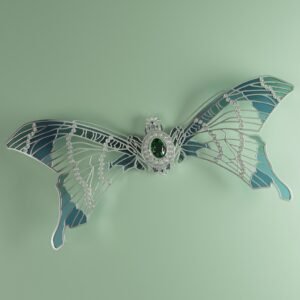
Rhino is a fine luthier’s instrument – a violin, perhaps, or a classical guitar. Mathematical in its construction, not trying to do everything, but in the right hands capable of extraordinary expression. And crucially: it rewards mastery over time.

“Rhino won’t make you creative. But it will expose whether you are.” – ChatGPT

Rhino is one of the few tools where your idea can go from sketch… to object… to something you can physically hold and say: ‘Yes, I made this—and yes, it fought me the entire way.’

And above all, McNeel & Associates have stayed modest when most of all the other 3D software producers have become very expensive, focused on expensive subscription based loyalty programmes and without a lot of real upgrades in their platforms. 

Let’s discuss settings, gemstone light behaviour, NURBS surfaces, render composition, and brand perception in the same afternoon. Rhino will be my weapon of choice. 

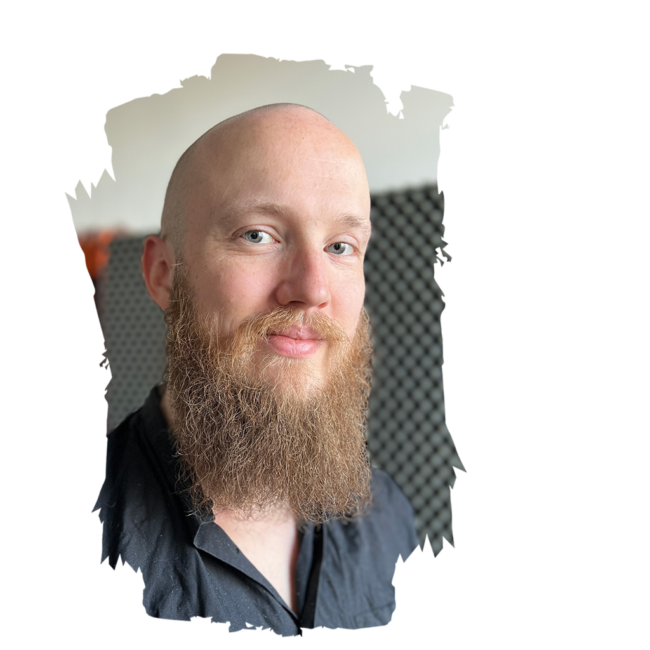
I am a multidisciplinary designer based in Paris, where we do high-end jewellery design, digital craftsmanship, and visual storytelling. Working somewhere between traditional craft and modern technology.
 
I grew up in a South African workshop, surrounded by goldsmiths and makers, which introduced me at an early to a very physical understanding of how things are built. That background shaped everything that came after — including how I approach using digital tools. For me Rhino isn’t software so much as an extension of the bench: a way to think through form, material and process before anything gets made.
 
Architecture and industrial design have also crossed the path along the way, and that broader spatial thinking has fed back into my jewellery work in ways I finds hard to separate. 
 
I am also co-author of a book teaching The Essential Guide to Digital Jewelry Design, a bilingual English-Japanese reference on CAD jewellery design using Rhino and Grasshopper, for which my Japanese friend, Akiyo Matsuoka and I also started a YouTube channel.
 
Personal credo: I value quality, precision, independence, and originality — and get irritated by mediocrity, empty hype, or lazy work. I prefer substance over noise, skill over fashion, and elegance over trend-chasing.

SVETLIN NIKOLOV

The Path to Zenith

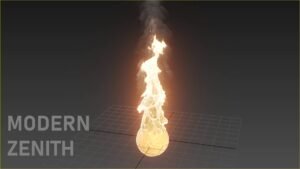
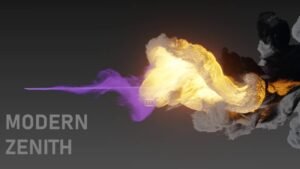
A timeline of what led to the creation of tyFlow 2’s Zenith fire/smoke GPU solver and how it came together, month by month. Expect a ton of images and videos from the process, some memes, some technical details about fluid sims: sparse and dense solvers, CPU vs GPU, Zenith vs Phoenix, working at home versus working at a corporation – a little bit of everything.

Svetlin loves simulations – fluid simulations, racing simulations, everything that resembles the real world from a safe distance. His unlikely path led him from classical and technical drawing and making miniature models in a small town in Bulgaria, through corporate gamedev, then leading the Phoenix fluid solver development at Chaos, and finally – to a small quiet town where he sits in front of the computer, digs and plants in his yard, and plays loud metal music.

Turpal Saytiev

Over-Delivering Without Getting Taken Advantage Of

Most people think that over-delivering leads to burnout and scope creep, often misunderstanding it as simply “doing more work.”

As both a studio owner and a client, I’ve seen what actually matters in a working relationship.

This talk explores how over-delivery really works in practice, and why the best vendors aren’t those doing more work, but those creating the least friction.

We will discuss how to over-deliver strategically without raising workload, while boosting client trust, repeat business, and long-term leverage.

Founder & Creative Director at Futhark Studios | CGI hyper-real film studio.
 
My journey in 3D animation and motion design started at 18. By 21, I founded Futhark Studios, driven by a passion for creating stunning cinematic trailers and dynamic 3D motion design commercials.

Paul Roberts

Rule-Based Worlds: Procedural Thinking for Natural and Built Environments

Most modern environment creation still relies on scattering tools to place huge swathes of assets like grass, bushes, rocks and trees.  Whichever software you use, the focus is often on filling an area by putting objects on a surface or in a spline rather than understanding why anything is growing there in the first place. 

In real life, environments are shaped by multiple interconnected conditions. Factors like light, water, soil, altitude, proximity to other plants, human disturbance, slope, and scale determine where things grow and how they interact. If any one of these is changed then the results are different. 

The same principle applies to built structures. Architecture also follows rules of repetition, modularity, alignment, proportion, and human scale. These relationships define how elements fit together and the parameters for how they adapt if something changes.

This session looks at how to identify these conditions and create rules so they remain editable throughout a project’s life cycle. Drawing on over 25 years of development in procedural tools for 3ds Max, it shows how artists can move beyond simple distribution and begin to build sophisticated systems that respond to environmental and man-made constraints.

For over 15 years, Paul has led content and communications at ITOOSOFT, so most explanations, announcements, and attempts to put procedural thinking into plain English tend to start with him. His focus is helping artists get more from tools like ForestPack and RailClone in real production environments.
 
Working closely with the development team, he translates new features and ideas into practical examples, documentation, and training. The emphasis is always on use in real practice and how procedural approaches improve efficiency, keep scenes flexible, and support art direction as projects evolve.
 
His work draws on ITOOSOFT’s 25+ year history of building tools for large-scale environment creation in 3ds Max.

Habib Gahbiche

Who Decides What’s Next in Blender? 

Blender is a free open source 3D creation tool for modeling, animation, rendering and visual effects. The talk will explain the decision making process in Blender about designing and prioritizing new features, how we work with a large community of users and developers and the key challenges that come with that process. 

Habib is a developer working at the Blender Institute, focusing on compositing and storyboarding in Blender. Before joining Blender in 2025, he worked in the scientific instrumentation industry while contributing to the Blender project as a volunteer. 

Štefan Lopušný

Success 102

If you saw their talk 3 years ago, Recipe for Success, you shouldn’t miss this one (because it’s the next one). This time Stefan will take it even further and give you the more in depth behind the curtain knowledge they acquired on the road.

In 3 simple steps Stefan will take you through the essentials of what is needed to run a Studio of your dreams. You want to grow out of your shell ? Do you want to have a strong team that you can rely on ? You want to have only projects that you can be passionate about ? Always ? 

You want to be bulletproof to any major industry shifts ?

Find out what is needed to achieve this every time, no tricks. 

*Disclaimer: might contain sarcasm and meme-ing.


Stefan completed his Architectural degree in Bratislava. Since the working environment was only pretending to be creative (at least where he was), he decided to step into a little more unexplored field of Visualization.

Starting Fat Tony studio, Moving to Greece, now living in The Netherlands, he and his partner Sofia grew tired of standard Visualization eventually as well.

Having no other choice but to follow their inner voices, they did their best to once again shift into what they thought will be more creative, rewarding and fulfilling work. 

And guess what … 

Oli Kentner

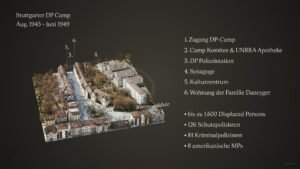
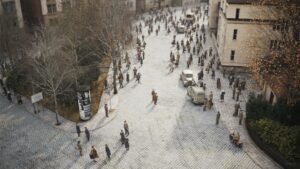
Reconstructing History – “The Tragic Fate of Shmuel Dancyger”

A fact-based digital reconstruction of a 1946 post-war tragedy, documenting the death of a Polish-Jewish Holocaust survivor that sparked international outrage.

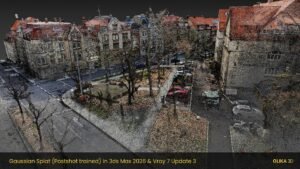
Discover how historical archives, modern 3D scanning, 3ds Max, V-Ray, a few new tools and dog walks were combined to rebuild the Stuttgart Displaced Persons camp. 

I will discuss the technical and ethical challenges of visualizing sensible history in the most respectful way. Showing how CGI can be used to shed light on the tragic, almost forgotten story of Holocaust survivor Shmuel Dancyger. 

Throughout every step of the production, I like to challenge the process and ask: what is the workflow in 2026?

Is it old, new, or a hybrid of both? Re-topo or No-topo in 2026?

Independent 3D artist and CGI generalist based in Stuttgart Germany.

With over 15 years of industry experience and a passionate love for pushing pixels, I usually focus on visualizing tech stuff for brands like ZEISS, DLR & The Ocean Cleanup, constantly trying to bridge the gap between engineering and CGI.

Dries Depoorter

In this engaging talk, Dries Depoorter delves into his world of his art, blending the boundaries between technology and creativity. Attendees will be taken on a journey through Depoorter’s recent and upcoming projects, offering insights into the conceptual and technical processes behind his works. Dries will showcase live demonstrations of his art in the form of giving away likes or followers. This lecture offers a unique opportunity to learn more about the projects that have brought him worldwide recognition.

Belgian creative technologist and artist Dries Depoorter, based in Ghent, creates thought-provoking work about technology, surveillance, AI and social media in a playful way that makes people laugh while delivering serious messages in an accessible way. His projects explore digital culture that can inspire marketers: privacy challenges, artificial intelligence applications, surveillance and authentic social media projects.

With his unique background in electronics and digital innovation, Dries has become a voice for forward-thinking brands and marketing professionals looking to navigate today’s complex digital landscape. His artistic approach can directly inspire brands to think differently and develop original marketing concepts that stand out. Through his work, Dries demonstrates how combining creativity with technological insight creates viral moments.

His award-winning “Die With Me” app, accessible only when a user’s phone battery drops below 5%, demonstrates how scarcity and unique user experiences can create powerful engagement. On Black Friday, he doubles the price of his app instead of offering discounts, showing brands how breaking marketing rules can create attention.

In his viral project “The Follower,” Dries leverages open cameras and AI to reveal the reality behind curated Instagram moments—offering marketers an unfiltered look at consumer behavior and content creation.

Meanwhile, “The Flemish Scrollers” uses AI to automatically identify politicians using smartphones during parliamentary sessions, highlighting how technology can create accountability and transparency in public spaces.

Dries has exhibited at prestigious venues including the Barbican in London, Art Basel, Mutek Festival in Montreal,ZKM, Bozar, WIRED and Ars Electronica.

As a speaker, he’s shared insights with innovative organizations including TEDx, MoMA, SXSW, Chanel, Adidas, Samsung, Deloitte, KBC and Adobe.
Dries Depoorter. Photo by IO

Faruk Heplevent

DNA of a Procedural City – Scope City 2.0

This presentation introduces Scope City 2.0, a procedural city generation system developed by The Scope to create photorealistic urban environments for modern CGI productions. The talk will explore how a small studio approached the challenge of building scalable digital cities and developed a production pipeline combining Houdini, Maya, and Substance Designer to enable fast generation, high performance, and strong artistic control.

Attendees will get an inside look at the procedural asset creation workflow, material and texture systems, and the use of OpenUSD and MaterialX for interoperable pipelines. The presentation will also demonstrate how procedural tools can support a wide range of applications – from automotive CGI and VFX to virtual production, game environments, and emerging AI research scenarios.

Through production examples and technical insights, the session will outline how procedural approaches can help studios build flexible, reusable city environments while maintaining photorealistic quality and creative direction.

Faruk Heplevent is the Founder, CEO, and Creative Director of The Scope GmbH, the Hamburg‑based CGI studio that has redefined how the world’s leading carmakers visualise their vehicles.
A trained photographer, Faruk entered the industry in 1990 as an assistant on still‑life sets, moved into high‑profile automotive shoots by 1999, and – in 2007 – channelled three decades of craft into launching The Scope, coining the term “CG Photography” to describe the studio’s purely computer‑generated, camera‑grade imagery.
Under his leadership, The Scope has produced award‑winning campaigns and launch assets for Audi, BMW, Tesla, NIO, Genesis, Volkswagen, Toyota, and many more, earning recognition at Cannes Lions and other international festivals.
Faruk’s R&D mindset led to Scope City (2022), a procedural, photoreal urban “city generator” that gives clients fully customisable cityscapes – a breakthrough highlighted by industry partners and podcasts.
Today, he balances creative direction with thought‑leadership on the convergence of CGI, real‑time engines, and AI, sharing insights on stages and in media worldwide. When not iterating on the next visual toolset, Faruk enjoys life in Hamburg with his wife and four sons.

AJ JEFFERIES

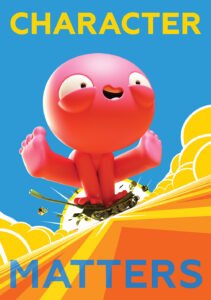
Rendering With Character

A retrospective of his 25 year-long career to date, with a strong focus on CHARACTER and the tools and techniques that have allowed him build a career as a solo CGI artist

  • Technical breakdowns of how he stages and lights scenes.
  • Adapting a physically accurate workflow to push shape, form and style.
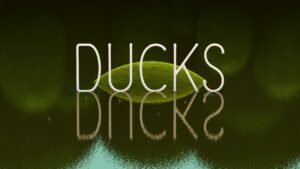
  • Behind the scenes clips from his commercial and personal animation projects, including his latest, award winning short “DUCKS”.

AJ Jefferies is a multi-disciplinary digital artist, animator, director, illustrator and character designer from the UK. With a career spanning over 25 years, AJ has created countless images, characters and animations for the advertising, gaming and entertainment industries. Along with his professional work, AJ also enjoys writing, directing and animating his own independent short films, almost always about weird, screaming creatures.

Copyright © EUE Foundation 2026

KvK: 89342143

General terms and conditions: the ICT-Office Terms and Conditions, filed on 14 January 2009 with the Chamber of Commerce for the Central Netherlands under number 30174840, apply to all our offers and agreements.

Privacy Policy Contact us on Discord, by email or phone.